top of page

NEWS + BLOG

Read about our latest projects, events, and other announcements. You can also stay connected with us by subscribing to our monthly newsletter.


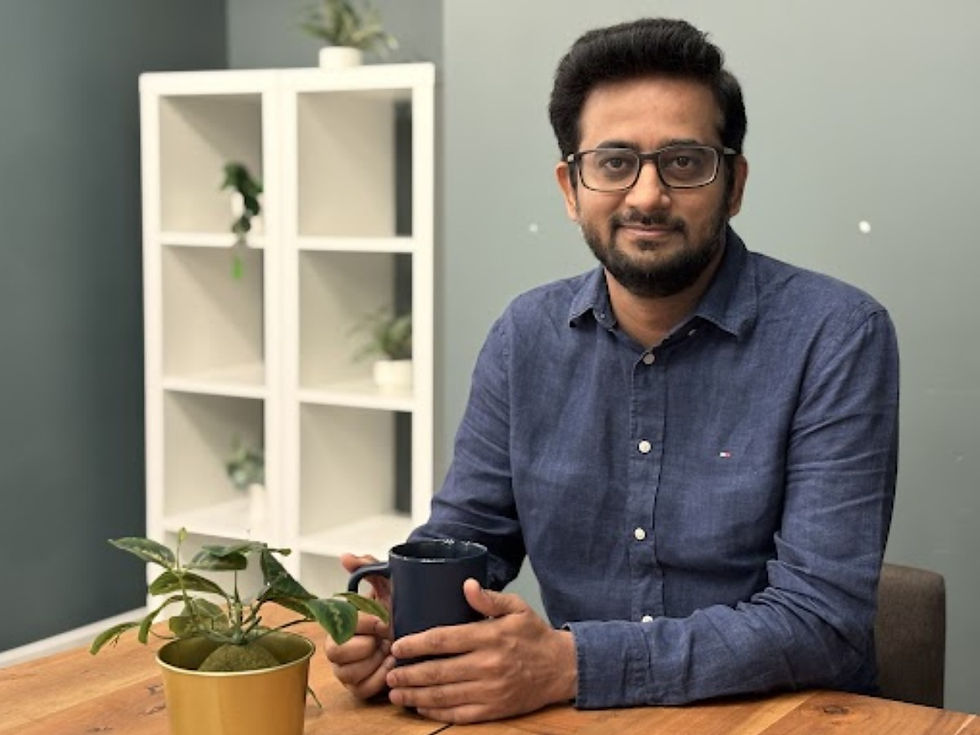
Photo by Sharon Mathews 

On a sunny Thursday evening, we got our coffees and sat down with Pankaj Patil, Director, to learn more about his experiences across the energy, maritime, and transportation sectors. With nearly 15 years of experience at the intersection of policy, finance, and operations, Pankaj brings deep practical insights and sector expertise to Karp Strategies. His experience spans an impressive range of sustainable infrastructure initiatives across North America, Europe, and Asia, such as energy storage, charging infrastructure, green hydrogen, shipping, and ports.


In this conversation, Pankaj talks about his work before Karp Strategies and what he is most excited to continue with as part of the team. He delves into the importance of ports and maritime infrastructure, as well as the need for stakeholder engagement to support a just transition and equitable economic growth in such projects. Furthermore, he discusses the next frontier for the global energy sector and about his banana pudding, which rivals Magnolia Bakery’s. Keep reading to learn more!


How do you like your coffee?


The best way I like coffee is sprinkled on tiramisu, as I’m not a big coffee drinker. I do love a good, homemade masala chai though, preferably made by me.


How did your career lead to you working at Karp Strategies?


I've been working in the energy, maritime, and infrastructure space for nearly 15 years. I started my career as an engineer and later transitioned into finance, giving me a comprehensive sense of how infrastructure projects are conceived, financed, and implemented. Over the past 7–8 years, I shifted my focus toward policy, which helped me understand the broader economic and community impacts of infrastructure development.


What drew me to Karp Strategies is the unique way we approach this work. Infrastructure will continue to be built – with or without us – but what sets Karp Strategies apart and the way we bring value is by making these projects more inclusive, equitable, and socially impactful. Our emphasis on stakeholder engagement, data-driven impact analysis, and equity-focused planning ensures that the projects we support are not only commercially and technically sound but also contribute meaningfully to building resilient, inclusive communities. I was really inspired by the mission and the work Karp Strategies was doing, and I knew I wanted to be part of a team that was shaping infrastructure in a way that truly benefits people.


What are you most excited about working at Karp Strategies, especially within the energy sector?


A robust social and physical infrastructure is foundational to any economy’s development. What excites me most about working at Karp Strategies is the opportunity to help ensure that infrastructure projects, especially in the energy and maritime sectors, truly deliver on their intended outcomes. Too often, promising initiatives face delays or resistance not because of technical issues, but because stakeholder perspectives were not integrated early enough. At Karp Strategies, we focus on inclusive engagement that is thoughtfully designed to support delivery, reduce risk, and strengthen outcomes.


My approach is grounded in hands-on experience of working closely with project developers and owners, investors, as well as the public entities. I have spent time on site at ports and worked at a battery energy storage startup, liaising with policy makers and community organizations while working on projects. Infrastructure projects face delays and suffer cost overruns, significantly hurting their commercial viability. Therefore, I understand the importance of the timely delivery of projects to the owners. This is all the more critical in a highly dynamic and evolving clean-energy space where technologies evolve so fast and projects can become irrelevant if the timeframes are not met. This has been a major concern of investors when they conduct their pre-investment due diligence. Therefore, sometimes an activity that is merely seen as a formality or compliance requirement can have a significant impact on the project outcome. 


At Karp Strategies, I’m able to bring this project owner, developer, and investor's perspective to work closely with clients to align stakeholder strategies with business goals. 


One example where this stakeholder-informed approach has been particularly effective is with a complex urban housing project in Brooklyn that our team is currently working on.  While we were not part of the project’s earlier phases, we are helping the developers and public agency build the programs that will shape an equitable path forward by integrating longstanding community goals into the overall project strategy. This has been an incredibly satisfying experience. 


I’ve also worked internationally on the electrification of maritime transportation, including projects in Norway, India, and Singapore. Electrification and automation can pose risks to certain jobs, especially if they’re not trained in new technologies. Also, some business owners can feel threatened by this. Therefore, in many places, there’s understandable resistance to change. Through careful stakeholder engagement, we’ve been able to surface those concerns and begin designing pathways, like workforce development and skilling, and support to small business owners to ensure no one is left behind. That’s the kind of impact I’m excited to continue bringing to my work here. 


Tell us more about this - what has a just transition in the green economy looked like in your past work? 

Much of my work in the energy transition and green economy has focused on the electrification of transportation—both road and maritime—and ensuring that these transitions are not only environmentally effective but also socially just and economically sound.  I’ve been involved in efforts to develop electric vehicle infrastructure for road transport as well as electrifying shipping, particularly coastal shipping, which has a large role to play in reducing emissions from freight transport. This is particularly relevant in coastal urban centers from New York to Shanghai and Mumbai to Miami. Government agencies are working on policies that encourage the development of more resilient and sustainable infrastructure and funnel finance into these projects. Private firms and financial institutions are concerned about the perceived risks involved in these projects related to climate and local communities. Karp Strategies understands these complexities in project delivery - balancing cost and timelines to navigate regulatory requirements and compliance. Our role is to bridge these priorities by designing engagement and benefit strategies that effectively blend operational realities and community needs. Also, we help in identifying priority areas for a project and address them to prevent challenges cropping up during the implementation and operational phase.  


A key example is my involvement in projects supported by the World Bank and Norway in Asia, where we worked on the transition to electric coastal shipping. These projects had significant environmental goals, like reducing emissions from shipping. But they also raised concerns from local stakeholders, especially around job security and economic displacement. The shipping sector supports many livelihoods, and any transition that includes automation and new technology also carries the risk of job loss for those not trained in the new systems. In the same manner, energy transition pathways are different for different sections of society. 


That’s where a just transition comes in. In those projects, we spent time engaging directly with stakeholders, listening to their concerns, and helping design programs to support workforce re-skilling, up-skilling, and economic inclusion. This helps not only local communities but also the companies delivering, owning, and operating the projects. At Karp Strategies, I continue this work through projects like NYCEDC’s Marine Highways (Blue Highways) initiative, which aims to shift cargo transport from roadways to the waterways, contributing to decarbonization of transportation, reducing traffic congestion, and making our cities more livable. I’m involved in another project where we are collaborating with BESS developers and owners for NYSERDA’s Index Storage Credit Solicitation to support the successful delivery of energy storage projects across New York State.   


Renewable energy is one of the most discussed sectors both nationally and internationally. What are your thoughts on the industry and its evolution?


This is a topic that’s very close to my heart. If you look across history, no country has significantly improved the standard of living for its people without significantly increasing its energy consumption. That trend will continue: energy is foundational to economic growth and quality of life. What’s changing now is how we generate, manage, and consume that energy.


The future of energy won’t be dominated by a single source. Instead, we’ll rely on a diverse mix: solar, wind, hydro, nuclear, along with traditional sources. Over the past decade, we’ve made remarkable strides in scaling wind and solar capacity. But looking ahead, I believe the next frontier is energy storage. For the next three to five years, the focus will be on developing utility-scale battery energy storage systems (BESS), which are essential for stabilizing power grids and ensuring the reliability of energy supply across markets.


I'm also increasingly optimistic about the role of nuclear energy. While there are political and social sensitivities around the sector, we’re seeing growing support for nuclear as a clean, stable source of power around the world. With advancements in next-generation small-modular reactor technology, I think we’ll see more projects in that space five years from now.


Ports are one of the most important pieces of infrastructure in our globalized world, yet consistently not recognized as such. Why do you think ports are so important, and what work do you get to do related to ports at Karp Strategies?


Ports have always played a critical role in human development, even if that role often goes unrecognized. Throughout history, most major cities, and certainly many global financial capitals, have grown around ports. Yet despite their importance, maritime history is rarely given the attention it deserves. It may not be as glamorous as some other sectors, but ports are foundational to international trade, supply chains, and the economic resilience of countries. 


Today, digitalization and sustainability are the two main drivers of transformation happening in the ports sector. We’re seeing the adoption of automation, use of advanced technologies to modernize operations, and increasing pressure to decarbonize and grow sustainably. The shipping industry is also one of the most polluting industries globally, which makes decarbonization and climate adaptation urgent priorities. This directly affects the ports as well. Therefore, across the U.S. and other countries, major port authorities are launching initiatives to audit their assets, assess the vulnerability level, and plan projects accordingly.  


At Karp Strategies, we have worked closely with ports in Maine, Massachusetts, New York, and New Jersey to support these kinds of transitions. Some of our work focuses on helping ports diversify their operations and identify new revenue streams, apart from traditional industries like commercial fishing. We have partnered with port authorities, operators, and industry stakeholders to support the development of emerging industries such as offshore wind. Additionally, we are involved in several projects aimed at helping early-stage technology companies bring their innovations to market. We also support resilience initiatives: ensuring ports are prepared to withstand and adapt to the impacts of climate change. In that sense, we are well-positioned to support ports and maritime infrastructure with some of their biggest priorities today. 


Throughout your work with ports, what has been the most interesting experience that you have had? 


I’ve had the opportunity to visit and work with ports across the world, from Singapore and Shanghai to New York, and one consistent observation stands out - the increasing focus on the blue economy and the formation of maritime/ ocean clusters. The most interesting aspect for me is seeing how ports are not just gateways for goods, but are central to local economies, job creation, and innovation ecosystems. 


What’s particularly compelling is how deeply integrated some maritime clusters are with their surrounding communities. I’ve seen this firsthand in places like Norway, where even in small towns, the port and maritime industry are not something distant or external—they’re embedded in everyday life. The local economy, workforce, and even culture are closely tied to port activity.


As ports modernize and the blue economy evolves, the big questions are: How do we sustainably harness ocean and marine resources? How do we prepare our workforce for the jobs of tomorrow? And how can we support local startups and small businesses to be part of this transformation? At Karp Strategies, these are exactly the kinds of questions we’re helping communities and port authorities answer—especially as we anticipate significant shifts in the next two to five years.


What has been your most memorable site visit and why?

I was fascinated by the Port of Rotterdam, especially how they had an impressive range of operations within a relatively small area of about 120 Sq. Km. The amount of cargo they handle, their contribution to economic activity, and their seamless integration with local industries, like tourism, fishing, and with communities, is truly fascinating. 


What do you like to do outside of work?

I love to cook a lot, and that’s what I do on weekends. Some of my favorite things to make are gaajar ka halwa (carrot pudding), banana pudding – I believe my version rivals that of Magnolia Bakery, and of course, tiramisu.


Fast Facts


Last TV show I binge-watched: Chef’s Table


Restaurant (delivery) I’d recommend to close friends: It’s hard to pick a single spot, but I love getting pizza with friends at Adrienne’s Pizzabar in the Financial District. 


Best concert I’ve ever experienced: Zubin Mehta conducting the Munich Philharmonic at Carnegie Hall. We are both from Mumbai. 


Book that changed me: I read a lot of books on philosophy and political science, but if I had to pick one, it would be “Meditations” by Marcus Aurelius. 


Favorite course in graduate school: Macro-economics!


Movies I’d pay to see again and again: A Beautiful Mind and Troy


My heroes are: Three people - Dr. B.R. Ambedkar, the person who inspired me to pursue graduate studies at Columbia University; Gro Harlem Brundtland, former Prime Minister of Norway and the person who coined the term “sustainable development”; and FDR for leading the U.S. and the world during a turbulent time with vision and strength.


We grabbed coffee with Gopinath ‘Gopi’ Gnanakumar Malathi. We discussed his career transition from architecture to urban planning, the impact of data-driven approaches to economic development strategy, and his Urban Design Forum fellowship project, which aims to empower youth through participatory urban design. As a Senior Analyst at Karp Strategies, Gopi leverages his experience working with quantitative and geospatial analytics for public, private, and nonprofit organizations to support equitable economic and infrastructure development in New York, New Jersey, Pennsylvania, Massachusetts, and Maine. His journey from an architecture and urban design background to data analysis offers a unique perspective on integrating diverse disciplines to tackle urban challenges effectively.


Gopi began at Karp Strategies as a Graduate Analyst and over his four years at the firm, has had the opportunity to advance his career through promotions and varied experience, as he has been staffed on various projects with a focus on research and analysis. This fall, Gopi will transition into the PhD program at NYU Tandon School of Engineering, where he will investigate the social and ethical implications of urban information science.


How do you like your coffee?

Interestingly, I'm not actually a coffee person. I might be one of the very few who survived architecture school without coffee. I'm a big fan of hot chocolate, though—it's my favorite beverage.


Why did you join Karp Strategies?

During my graduate program at Pratt Institute, I became acquainted with several classmates, including Yuri Chang, who was already working at Karp Strategies. Additionally, Jen Becker, a principal at the firm then, was faculty. I remember hearing wonderful things about the diversity of projects, clients, and geographic contexts in which Karp Strategies was engaged. It felt like the perfect post-graduation opportunity to apply what I had learned at Pratt.


Describe what you do at Karp Strategies.

At Karp Strategies, I have a unique and interesting role. I support project teams in effectively identifying and addressing challenges our clients face using emerging data and advanced analytical methods. As an analytical lead working on economic impact assessments, retail supply/demand analysis, workforce conditions research, and neighborhood-level market studies for cities and towns across New York, New Jersey, Massachusetts, Maine, Rhode Island, and Pennsylvania. I work closely with associates and senior associates to design and implement mixed-methods research. This involves collaborating with analysts and graduate analysts to ensure our approaches are comprehensive and impactful. My goal is to contribute to insightful solutions that meet the needs of our clients and their stakeholders.


Coming from an architecture and urban design background, what inspired your transition into urban data analysis? How do you view data-driven approaches in tackling urban issues?

While urban design and urban information science may seem distinct, I find they both involve elements of design thinking and a systems approach. 


In this context, design thinking would mean the iterative and creative process of leveraging urban data analytics to consider context, the client’s needs, and community requirements—akin to how urban designers approach public space design projects.


A systems approach in urban design involves considering factors like climate, regulations, local culture, and/or building materials when developing a vision for a space. At Karp Strategies, I constantly consider the people, the economy, industries, businesses, places, neighborhoods, and demographics because changing any factor will impact all of the above. Therefore, I need to be conscious of the entire system and what is being impacted by the decisions I choose to make.

They're also very different because urban information science requires a scientific approach. It's important to understand the possibilities and the rationale, which, In this case, are grounded in both technical and social sciences. Urban design has a more creative approach.


In the rapidly evolving urban world, how do you effectively adapt and apply your knowledge and transferable skills to address new challenges or industries within this dynamic environment?

Obviously, there is a certain level of nuance and technical expertise in each of these different fields, which is acquired through years of academic training or professional experience. However, the work we do is very interdisciplinary. These different fields, including economic development, workforce development, real estate strategy, land use planning, transportation planning, infrastructure development, housing, or sustainability like renewable energy, are very much connected, intertwined, and interdependent by nature, which makes it very easy to transfer our experience from one of these to the others. 


Apart from that, I think addressing new challenges is critical because, as a civilization, we're facing unprecedented crises. They can vary widely, from geopolitical extremities to something as simple as shifts in population demographics, such as the aging of the American population, which is a critical new challenge for us to consider, evaluate, and address. These challenges underscore the importance of being a system thinker who can identify and solve issues within the broader context of various sectors or verticals.


What emerging trends in urban information science are you currently following or excited about?

This is a particularly interesting question—one that I’ve been thinking a lot about, especially given the rapid evolution of urban information science compared to other subfields in urban science. As data analysts, staying relevant is something important to keep in the back of your mind. At the forefront of urban information science lies artificial intelligence, particularly generative AI, which can streamline processes that are currently taking us hours in less than a minute. Industries are rapidly integrating AI into various analytical tasks, including descriptive, diagnostic, and predictive analyses. For example, companies like Esri are leveraging AI to help users identify relevant data sources, manage databases, and even analyze data without ever having to clean them up. Qualitative data is becoming much more indexable and analyzable.


On the other hand, they also pose challenges, particularly regarding accuracy, representation, and inclusivity. It's crucial to engage in ongoing discussions and reflections that not only focus on emerging technologies but also on emerging trends and theories. Take an example of counter-data and counter-mapping, which have been discussed for years, but are resurfacing as counter-algorithms. They are produced with a bottom-up approach to counter the status quo against the interests of grassroots communities and disadvantaged populations. 


Can you tell us more about your experience as a Forefront Fellow at the Urban Design Forum? What are you particularly excited about? 

This year's fellowship theme focuses on the youth in the city. Over the first six months, my colleagues and I conducted research and engagement to understand the unique opportunities and challenges that young people across different age groups, from school-age youth to young adults, face as they try to grow into becoming equal participants in shaping the future of New York City. Over the first six months, we conducted research and engagement to understand the unique opportunities and challenges the youth have to be equal participants in city spaces, city decision-making, and city processes.


Currently, we've formed smaller groups to design and implement projects to address the needs of young New Yorkers. To address the need for more engagement tools, my smaller group is developing a prototype for an urban design-based board game that will guide a group of youth to envision an imaginary public space, design it, and get it funded in a fun and engaging way.  We hope to empower youth to play an active role in transforming and advocating for their neighborhood spaces. Our goal for this board game is to be scalable and accessible to youth not only in New York City but across the country. 


The game itself will combine physical and digital elements, allowing youth to experiment with urban space when playing the board game and translate this into digital elements that they can further explore in augmented or virtual reality. By integrating digital technology into the gaming experience, we wanted to extend the impact beyond the game itself. We are experimenting with using LiDARscanners available on iPhones to capture the participant’s physical design and convert it into a 3D model, which they can use to advocate for and shape the spaces that hold meaning and matter to them.


A pilot version of this game being tested by school students in Washington Heights

What do you love about cities? What about urban planning do you enjoy the most?

I find cities fascinating because, in many cases, they epitomize democratic coexistence. They compel individuals from diverse backgrounds, speaking different languages, or holding different beliefs to share spaces and power. You don't necessarily have to engage with them, but it allows you to coexist with them and make them a part of your life. I see that as my main motivation to continue thinking about cities, which leads me to my interest in disciplines like urban design and urban planning, as they serve as tools to preserve and augment the diverse fabric of cities, towns, or other scales and settlements.


What has been your favorite highlight of working at Karp Strategies?

If you were to ask me a thousand times, it would always be the people that I have had the pleasure to know and the opportunity to work with. It’s been a nourishing experience to collaborate with people who are not just smart and talented but also incredibly passionate.


What do you enjoy doing outside of work? Hint hint: I guess you might say spending time with your dog?

Lately, I have loved spending time hanging out with my 11-month-old golden retriever, Poori. Besides that, I enjoy staying active and being outdoors. Whether it’s hitting skate parks, going on hikes, or simply relaxing at the beach, I'm always up for it.


Lastly, how has Karp Strategies supported your transition back into academia?

From the onset, my colleagues, managers, and the leadership team at Karp Strategies have been aware of my aspirations to pursue a PhD and have shown unwavering support to help me achieve it. They facilitated connections with professors at institutions I was interested in, encouraged me to apply for fellowship and funding to secure external research opportunities, and promoted me to roles within the firm that emphasized research and analysis. Their commitment extended to directly supporting my applications and writing recommendation letters, highlighting their investment in my personal and professional goals. 


The firm has provided me with an environment that fosters continuous learning and development. This experience has not only prepared me for the rigors of a PhD program but has also enriched my understanding of the practical applications of academic research in real-world scenarios. The experiences I've gained at Karp Strategies have been invaluable, shaping me into a more capable and confident individual ready to embark on this new academic journey.


Fast Facts:

Last TV show I binge-watched: The Mare of Easttown

Restaurant (delivery) I’d recommend to close friends: Kanyakumari (One of the best biryanis I’ve had in New York)

Book that changed me: How to Lie with Maps

Movie I’d pay to see again and again: Avengers: Endgame

My heroes are: Anyone committed to taking time between their day jobs, parenting, and everything else to advocate for civil liberties and human rights.


Ali with her daughter Thea

We grabbed coffee with Ali Sutherland-Brown to talk about cities, storytelling, and what it's like to be a working mother. We got some great book and movie recommendations too!


Ali is a Principal at Karp Strategies. As the first employee after Rebecca Karp founded the firm, Ali has been instrumental in helping build the company into what it is today. With over 13 years of industry experience, she previously worked at the NYC Department of City Planning and the Institute of Urban Design. She is a proud Coro Leadership New York graduate and holds degrees in Urban Planning and History/American Studies from MIT and Princeton, respectively. While trained as an urban planner, she is also an ardent advocate for creative and adaptive communication: “A good idea doesn’t mean very much if you can’t communicate it well.” She is also obsessed with behavioral economics and organizational psychology. Karp Strategies could not have grown to where it is today without Ali’s fierce commitment to the company and its people and passion for the work.


How do History and American Studies inform your practice of City Planning?

There’s always context and history you have to appreciate. American Studies is an interdisciplinary subject, and it totally changed my perspective on the different lenses through which you can think about and experience a place. You need to know its streets, its maps, its music, its novels, and its people—just to name a few elements of what ‘place’ really is. This idea is central to my work, and I use it to examine creative ways of understanding. Beyond that, part of the reason I love this field is that while I may be an expert in methodology, I am not an expert about every place we work in. Humility is critical, and my job is to understand the expertise that already exists in communities. You can find all of that if you take an interdisciplinary approach.


How has your experience living in different cities guided your understanding of urban planning?

I didn’t really know what urban planning was in undergrad—I just always knew that I loved cities and had a strong reaction to space. Living in different cities made me realize how much I’m affected by the built environment. For example, when I was an undergrad, I really thought I was going to be a TV writer and producer. But when I spent a summer interning in LA, I realized I just couldn’t live in such a car-centric place. Manhattan, Brooklyn, Cambridge, Chicago, DC, LA, and Ottawa—they are all so different but fundamentally led me to this career. I do this job because I want to positively affect how we experience cities and highlight how place and space affect our physical and mental health.


Why is the craft of writing and storytelling important to your work?

Everything is fundamentally about communication—every job comes down to your ability to communicate well with the people around you. This allows you to get what you need from your job, motivate other people to do their jobs, and be satisfied throughout it all. Ultimately, there is no shortcut to having an open line of communication or establishing empathy with someone—and this is the #1 thing I try to bring to my leadership at the firm and to clients. Just have the conversation. Prepare for it, especially if it’s a tough one. And see the situation from the other person’s perspective before you ever show up in the room. Written communication is also incredibly important because one of our primary jobs as urban planners is communicating the content we’ve created. We’re not doing our jobs effectively if we are not, for instance, writing as crisply and cleanly as we can. ‘Storytelling’ doesn’t have an implication of falsehood, to me—it’s all about getting your message across.


What has been your favorite highlight of working at Karp Strategies?

Growing the company! As someone with a degree in Urban Planning, I never thought that half my job would be helping to build a company from scratch. To the extent that people become urban planners because they’re excited to build something—a park, a facility, a district, a city—this company is what we’ve built. And by ‘we,’ I mean everyone who works—or has worked—here has contributed to its DNA. This has been one of the most unexpectedly rewarding experiences of my life. Making Karp Strategies the best company it can be is such an immense but rewarding challenge because if we can do that, then we can keep doing this great work.


Tell me a life-changing moment that helped shape who you are today.

Having my daughter—she’s two years old and is the best person I’ve ever met. Mostly, she makes my life much more complex, and also weirder and more wonderful than I thought possible (you can’t really anticipate the experience of dancing to Cookie Monster’s interpretation of a Swedish electropop beat until it happens to you). As this relates to work, historically in the US, there’s been a mistaken impression that working mothers are distracted and, therefore, less valuable as employees (I highly recommend Jessica Grose’s recent book on the subject). But working mothers are the most efficient and empathetic people you’ve ever met. Falling under the category of ‘cliche for a reason’: parenthood has changed my perspective on everything, including what work can and should be. And for what it’s worth, I’m immensely grateful to work somewhere that doesn’t just tolerate but celebrates my family and intense responsibilities at home.


Fast Facts:

Last TV show I binge-watched: Yellowjackets

Restaurant (delivery) I’d recommend to close friends: Mint Heights

Best concert I’ve ever experienced: Belle & Sebastian

A book that changed me: Anything by Lauren Groff and James Baldwin, Americanah (Chimamanda Ngozi Adichie), Priestdaddy (Patricia Lockwood), Slouching Towards Bethlehem (Joan Didion), Why We're Polarized (Ezra Klein), The Image of the City (Kevin Lynch)

A movie I’d pay to see again and again: Charade, Rear Window

My heroes are: Nora Ephron, Barack Obama, Kathryn Bigelow, Lorne Michaels, Jean Michel Basquiat, Daniel Kahneman, Holly Whyte

bottom of page